Peptide Storage & Handling: Keeping Vials Stable
Peptides are sensitive molecules, and how you store them has a real effect on stability. The rules differ depending on whether the vial is still dry or already reconstituted.
Dry (lyophilized) storage
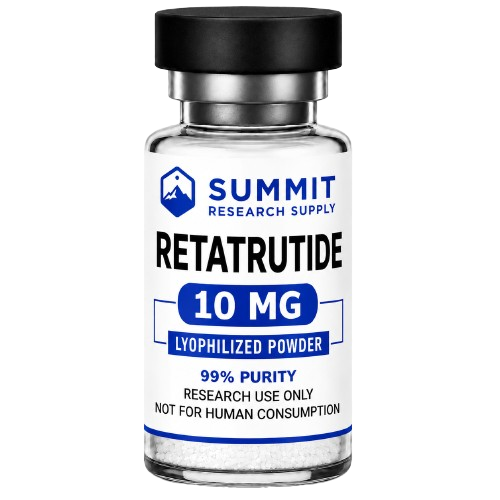
In their freeze-dried state, peptides are relatively stable. Kept cold and dark — refrigerated for the near term, or frozen for long-term storage — an unopened lyophilized vial holds up well. Cold and dark is the theme for every stage.
After reconstitution
Once you add bacteriostatic water, the clock starts. Store the mixed vial in the refrigerator, keep it out of light, and plan to use it within a limited window (commonly a few weeks, depending on the compound). The benzyl alcohol in bacteriostatic water helps, but it does not make a reconstituted vial last indefinitely.
Freezing
Freezing is fine — and preferred for long-term storage — for dry powder. Do not freeze a reconstituted vial: freeze-thaw cycles can degrade the peptide and the freezing can damage the solution.
Light and heat
Heat and UV light both accelerate degradation. Keep vials away from windows, radiators, and warm electronics, and return them to the fridge promptly after drawing.
Travel
For travel, an insulated case with a cold pack keeps vials in range for short trips. Keep dry and reconstituted vials cold and dark, and avoid leaving them in a hot car or in direct sun.
Signs of degradation
A solution that was clear turning cloudy, developing particles, or changing color (outside of expected cases like the normal blue of GHK-Cu) is a reason to discard the vial rather than use it.
Key takeaways
- Dry powder: cold and dark; freeze for long-term storage.
- Reconstituted: refrigerate, keep dark, use within its window — never freeze.
- Heat and light accelerate degradation at every stage.
- Cloudiness, particles, or unexpected color change = discard.